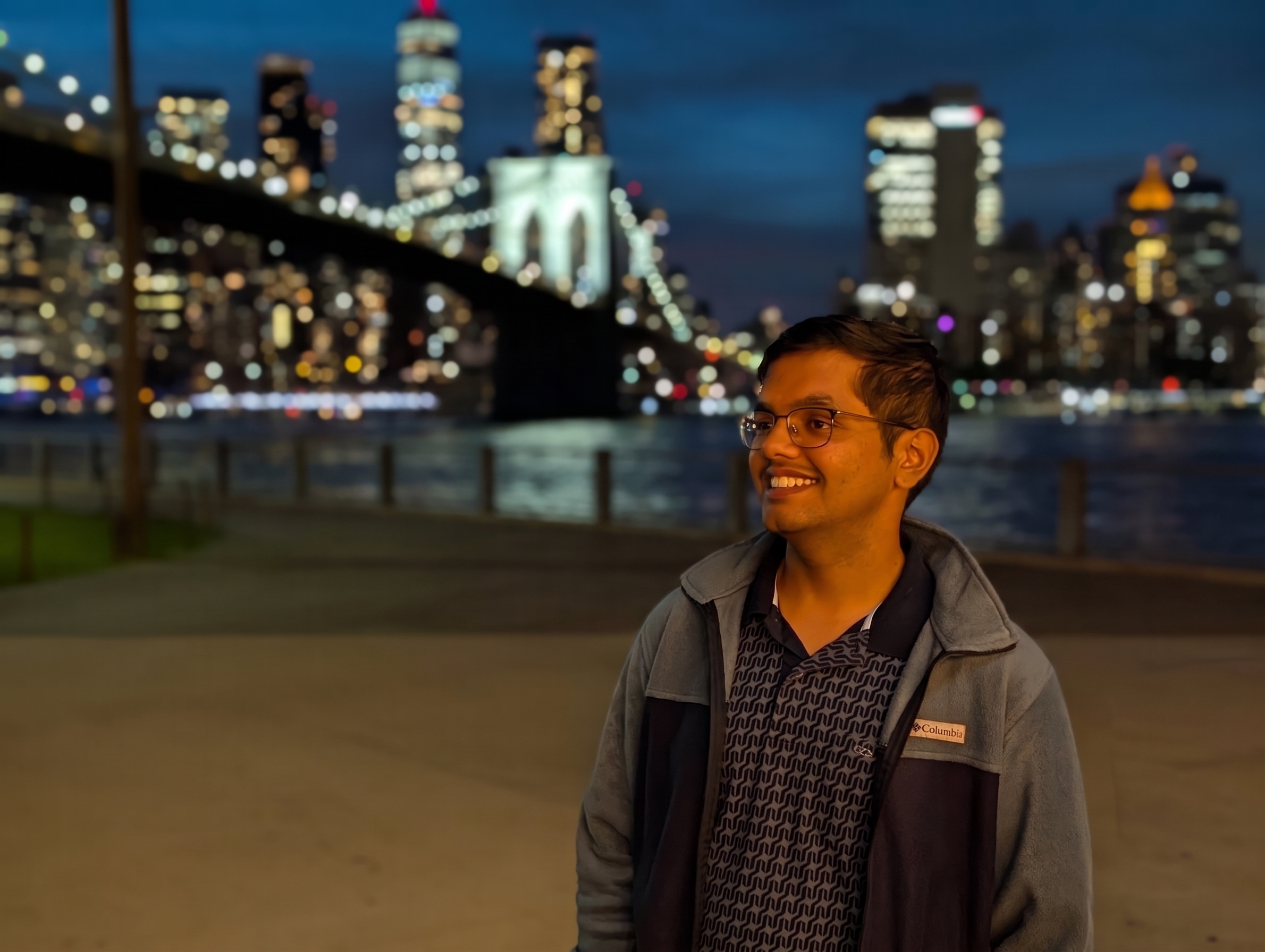
Multimodal learning · Physical AI

Pushkal Mishra

PhD student, Electrical & Computer Engineering
University of California San Diego

I am advised by Prof. Dinesh Bharadia in the WCSNG Lab. My research focuses on learning systems that perceive, reason, and act in the physical world.

I work on multimodal representations and vision-language-action models, with an emphasis on post-training through simulated interaction. My work connects sensor understanding, scalable simulation, and model adaptation to help autonomous systems learn from experience and generalize to new environments.

At Bosch Center for AI, I developed a framework for post-training VLA driving policies using feedback from their own simulated experience. The work combines parallel CARLA simulation and distributed fine-tuning to support large-scale learning and closed-loop evaluation.

Pushkal Mishra
San Diego, California

Recently

Updates

Scroll for earlier updates ↓

Methods, models & systems

Research

Learning from sensors and interaction,
from representations to driving behavior.

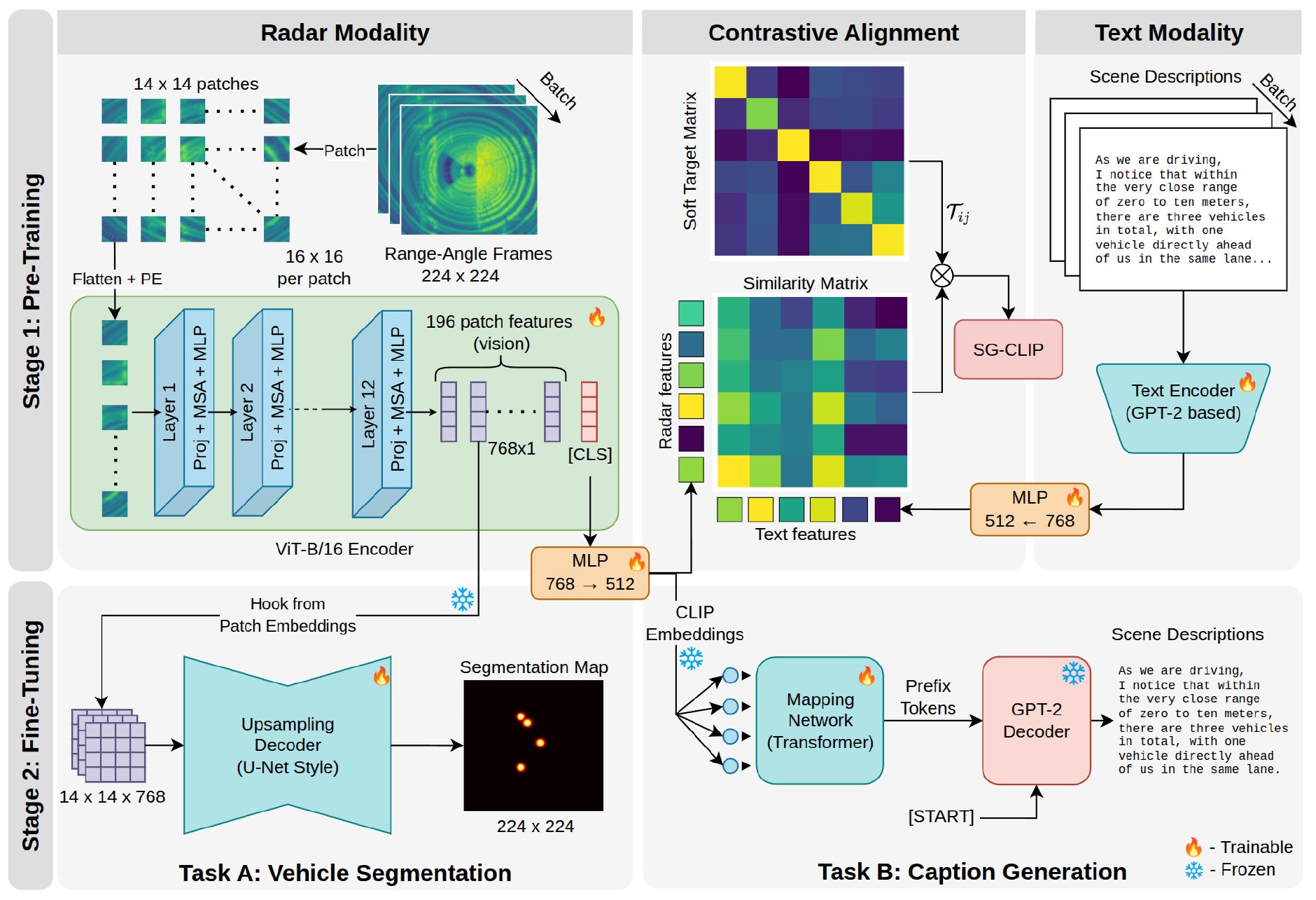
RadarLM architecture: contrastive radar-language pre-training followed by vehicle segmentation and caption generation using a frozen radar encoder.
Radar-language pre-training, segmentation, and caption generation. Figure 1 from the paper; click to enlarge.

UC San Diego 2025 - Present · Preprint

Radar-language representations for scene understanding

I developed a radar-language foundation model that supports scene description and object segmentation through a shared representation. Spatially aware contrastive training preserves object-location information, improving segmentation average precision by 21% relative to CLIP in simulation.

I built the data and distributed training pipeline for 800K+ radar-caption pairs from 110+ hours of simulation, and demonstrated transfer to real radar sensors by adapting a lightweight decoder.

  • Multimodal learning
  • Contrastive learning
  • Sim-to-real
  • PyTorch

RLM: A Vision-Language Model Approach for Radar Scene Understanding

Pushkal Mishra, Kshitiz Bansal, Dinesh Bharadia

arXiv, 2025 · Revised March 2026

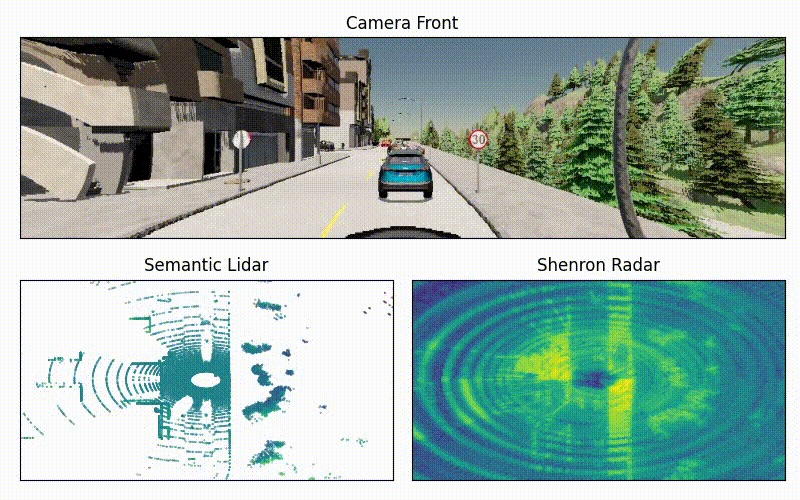
C-Shenron radar simulation poster showing the sensor modeling pipeline and driving evaluation.
Physics-based radar simulation integrated into CARLA.

UC San Diego 2024 - 2025

Radar simulation for autonomous driving

I co-developed a physics-based radar simulator that models material-dependent radar reflections and supports configurable sensors in CARLA. I built parallel data-generation pipelines in Kubernetes across towns, weather, and sensor configurations, and evaluated radar-camera fusion for end-to-end driving against LiDAR-camera baselines.

  • Sensor simulation
  • Synthetic data
  • Sensor fusion
  • Kubernetes

A Realistic Radar Simulator for End-to-End Autonomous Driving in CARLA

Satyam Srivastava*, Jerry Li*, Pushkal Mishra*, Kshitiz Bansal, Dinesh Bharadia

IEEE VTC Fall 2025

Demo Abstract: C-Shenron: A Realistic Radar Simulation Framework for CARLA

Pushkal Mishra, Satyam Srivastava, Jerry Li, Kshitiz Bansal, Dinesh Bharadia

ACM SenSys 2025 · Demo

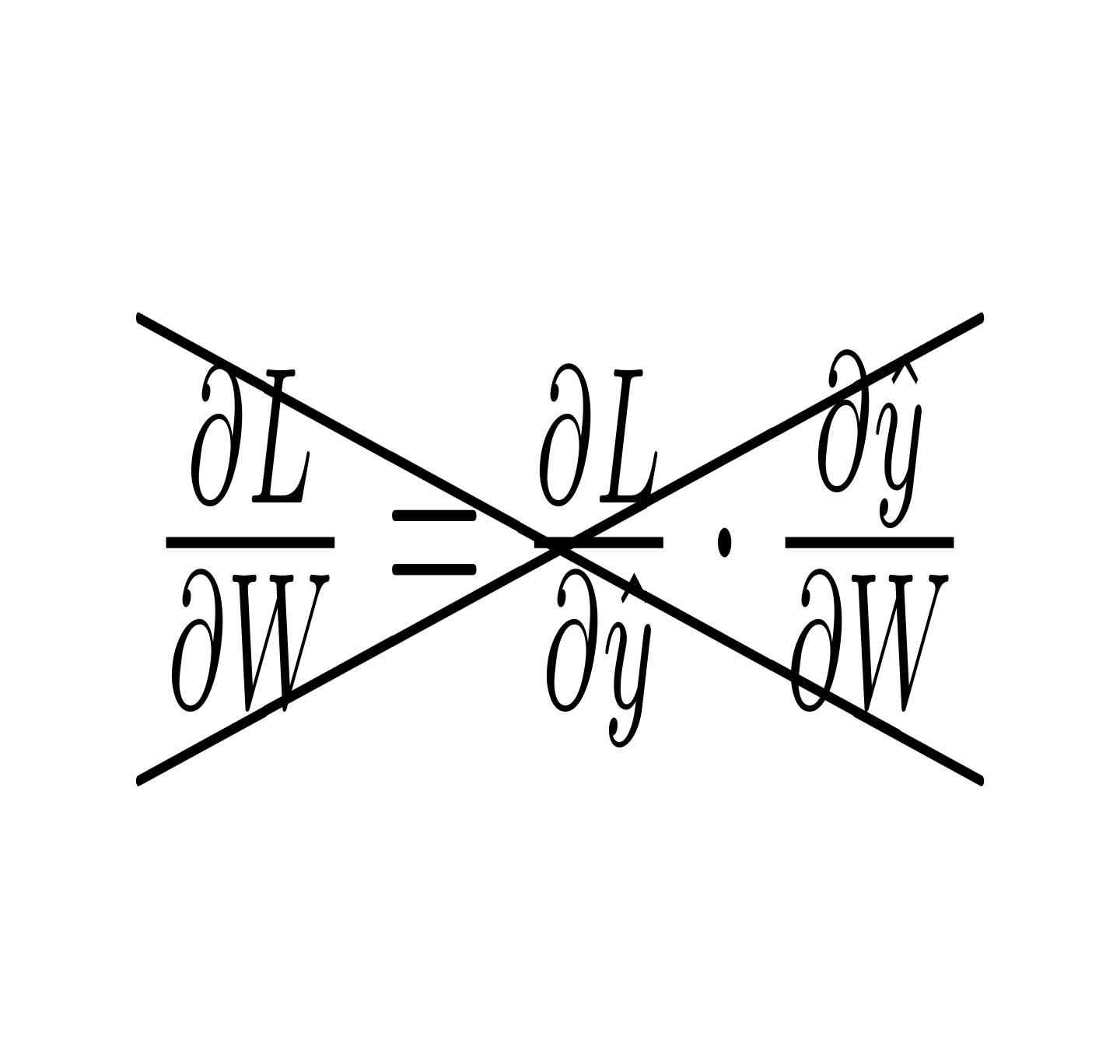
Architecture of a neural network trained using local learning objectives in a single forward pass.
Local learning objectives for memory-efficient training.

IIT Hyderabad 2023 - 2024

Memory-efficient neural network training

I co-developed a learning algorithm that trains neural networks in a single forward pass without backpropagation. I evaluated image classification and transfer learning in PyTorch, studying how training memory scales with network depth and batch size.

  • Learning algorithms
  • Training efficiency
  • Local learning

Learning Using a Single Forward Pass

Aditya Somasundaram*, Pushkal Mishra*, Ayon Borthakur

Transactions on Machine Learning Research, 2025

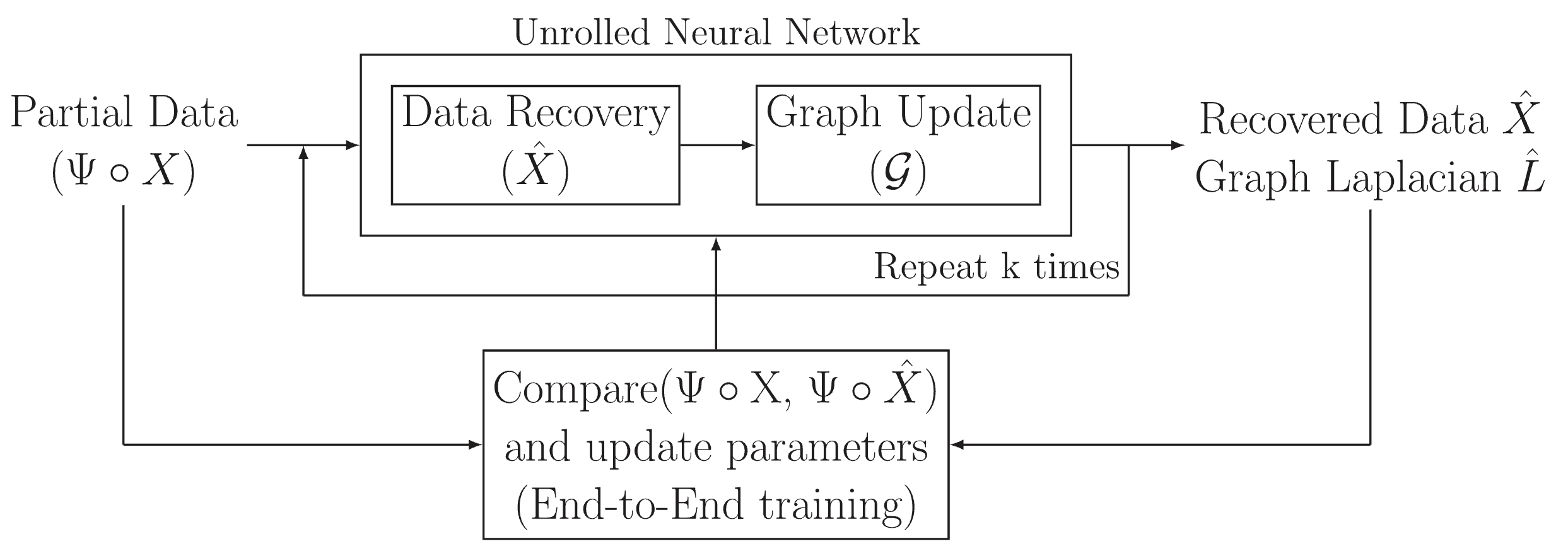
Architecture coupling sensor-signal reconstruction with graph learning through an unrolled optimization framework.
Joint reconstruction of measurements and sensor relationships.

IIT Hyderabad 2022 - 2024

Graph learning from incomplete sensor data

I developed an interpretable neural network that jointly reconstructs missing measurements and learns relationships between data sources. The architecture unrolls iterative optimization and uses reconstruction feedback to guide graph learning, with evaluation on synthetic data and noisy temperature-sensor networks.

  • Graph learning
  • Optimization
  • Signal reconstruction

Inpainting-Driven Graph Learning via Explainable Neural Networks

Subbareddy Batreddy*, Pushkal Mishra*, Yaswanth Kakarla, Aditya Siripuram

IEEE Signal Processing Letters, vol. 32, 2025 · Presented at ICASSP 2025

* Equal contribution.

Research & teaching

Experience

Bosch Center for AI

Jun - Sep 2026

AI Research Intern · Pittsburgh, PA

VLA post-training, simulation-based supervision, and scalable closed-loop learning. Research overview

UC San Diego

Jan - Mar 2025

Teaching Assistant, Embedded System Design · San Diego, CA

Led labs for 17 graduate students on embedded programming, multiprocessing, and real-time systems using PYNQ-Z2 and ARM processors.

IIT Hyderabad

Aug 2023 - May 2024

Teaching Assistant · Hyderabad, India

Conducted tutorials in Linear Systems & Signal Processing and Probability for AI with Prof. Aditya Siripuram.

Texas Instruments

May - Jul 2023

Signal Processing Intern · Bangalore, India

Developed cross-talk cancellation for spatial audio playback and efficient low-order approximations using biquad and all-pass filters.

A little more

Background

I completed my B.Tech in Electrical Engineering with a Computer Science minor at IIT Hyderabad. I worked with Prof. Aditya Siripuram and Prof. Ayon Borthakur on graph learning, signal reconstruction, and efficient neural network training.

Outside research, I enjoy swimming, squash, badminton, ultimate frisbee, music, and long drives. I also played squash in competitions at IIT Hyderabad.